
How to Sell Options for Income: A Beginner's Guide to Earning Passive Income From Your Portfolio
Learn how to sell options for passive income with this beginner's guide. Covers delta, theta, annualized yield, and realistic earnings from a trader with years of experience.
OPTIONSPASSIVE INCOMERISK ASSETS
Garrett Duyck
3/19/202612 min read
Quick Navigation: Explore the blog | Active Income | Passive income | job SHaming | Stairstep retirement
Most people hear "options trading" and immediately picture Wolf of Wall Street energy. Screens flashing red. Fortunes lost in seconds. Risky bets made by people with too much money and not enough sense.
I get it. That was my impression too, years ago, before I actually started learning how options work.
Here's the thing most influencers won't tell you: selling options is not the same as buying options. Buying options is a bet. Selling options is more like running a small insurance company from your brokerage account. You collect premiums. You manage risk. And over time, you build a steady stream of income that doesn't require you to quit your job, stare at charts all day, or sacrifice your weekends.
It took me about three years to go from curious beginner to having a repeatable system that generates income from my portfolio. I now manage most of my options trades on my phone, often during downtime, while cooking dinner, waiting in the school pickup line, or (honestly) in the bathroom. It fits my life because it was designed to.
In this guide, I'm going to walk you through everything I wish someone had explained to me when I started. No unnecessary jargon. No hype. Just the honest, practical foundation you need to understand what selling options is, how it works, and whether it belongs in your wealth-building plan.
If you're an employee with a portfolio and 5 to 15 spare minutes a day, this might be the most valuable passive income skill you ever learn.
What Selling Options Actually Is (And Why It's Not What You Think)
Before we get into the mechanics, I want to reframe how you think about options entirely. Forget the casino metaphors. Selling options falls under what I call the 7 Classes of Income-Producing Assets, specifically Class 7: Risk. That's because when you sell an options contract, you are literally accepting someone else's financial risk in exchange for a fee.
Think about it like insurance. When you buy car insurance, you pay a premium to your insurer. In exchange, the insurer assumes the risk that something will happen to your car. Most months, nothing happens. The insurer keeps your premium. Occasionally, there's a claim, and they pay out. But over many policies and many months, the math works in the insurer's favor. That's because they are selling you the service of predictability and, importantly, liquidity.
Selling options works the same way. You collect a premium upfront from the buyer. In exchange, you take on a specific obligation, either to buy or sell shares of a stock at a predetermined price. Much of the time, that obligation does not kick in. You keep the premium, and the contract expires. Occasionally, a trade goes against you, and you have to fulfill your obligation. But with the right system, the premiums you collect over time far outweigh the occasional payouts.
This is why I think of selling options as selling liquidity. It took me three to four years of trading to land on that description, and here's why it matters.
You're Selling Your Liquidity (Not Just "Renting Your Stocks")
You've probably heard influencers describe covered calls as "renting out your stocks." It sounds nice and tidy. You own shares, someone pays you rent, and you keep your property. Simple.
Except that's misleading.
When you rent out an apartment, the tenant leaves, and you still own the property. When you sell a call option on your shares, the buyer can exercise that contract and take your shares away. That's not renting. That's closer to a lease with an option to buy, which is a real concept in real estate but a very different arrangement than a standard rental.
Early in my trading journey, I had several trades end in early exercise, where the buyer exercised their right even when it wasn't obviously in the money. It caught me off guard. That experience taught me something important: as an options seller, you are at the mercy of your counterparty. They can call on your liquidity whenever they choose, within the terms of the contract.
That's why I prefer the framing of selling liquidity. When you sell an option, you're not earning money for nothing. You are selling something real: your control over liquidity in your portfolio. You're making your cash or your shares available to someone else on their terms, and you get paid a premium for that availability.
Understanding this distinction will make you a better, more prepared options seller from day one.
Options Basics: What You Need to Know Before You Sell
Let's cover the basics. An options contract gives the buyer the right (but not the obligation) to buy or sell 100 shares of a stock at a specific price (called the "strike price") by a specific date (called the "expiration date"). The seller of that contract is obligated to follow through if the buyer exercises their right.
There are two types of contracts:
Call Options give the buyer the right to buy shares at the strike price. If you sell a call, you're obligated to sell shares at that price if exercised. You collect a premium for this obligation. Call sellers generally expect the stock to remain flat or decline.
Put Options give the buyer the right to sell shares at the strike price. If you sell a put, you're obligated to buy shares at that price if exercised. You collect a premium for this obligation. Put sellers generally expect the stock to stay flat or go up.
Every contract has three critical components:
Strike Price: The predetermined price at which shares would be bought or sold. When the current share price is above the strike price the contract is said to be "in-the-money" and when the current share price is below the strike price it is said to be "out-of-the-money."
Expiration Date: The deadline for the contract, after which your obligation disappears.
Premium: The income you collect upfront for selling the contract
Each contract represents 100 shares. So a premium of $1.00 per share actually pays you $100 per contract.
That's really it for the basics. You don't need to memorize 47 different strategies to get started. You need to understand these building blocks, and then learn how to evaluate whether a specific trade is worth your time and capital.
The Two Greeks That Actually Matter: Delta and Theta
Options pricing involves several mathematical factors called "the Greeks." I'm only going to cover two in this article: Delta and Theta.
Delta: Your Probability Starting Point
Delta measures how much an option's price is expected to change for every $1 move in the underlying stock. But for sellers, delta serves a more practical purpose: it gives you a rough gauge of how likely the option is to end up in the money (meaning it could be exercised against you).
My starting point for most trades is a delta of 0.20 (or 20). This suggests the market expects about a 20% chance that the option will be exercised. That means roughly 80% of the time, the option is expected to expire out-of-the-money.
Some experts say delta is the probability that the stock will be at or above the strike price. I've found that interpretation to be inconsistent in practice. Don't treat it as a precise forecast. Use it as a starting place, then apply your own analysis and judgment.
Back-testing data (testing trades using past price data) supports this delta target for long-term success. A delta around 20 tends to be the sweet spot that balances a high enough premium to make the trade profitable with a low enough probability of exercise to keep risk manageable. It's where I've found the most consistent income over time.
I trade within a delta range of 0.10 to 0.40, depending on the situation. A lower delta means less premium but lower risk. A higher delta means more premium but a greater chance of exercise. The key is knowing where you're comfortable and being consistent.
Theta: Time Is on Your Side
Theta measures how much an option loses in value each day, purely from the passage of time. This is called time decay, and it is the options seller's best friend.
Here's why: every options contract is a ticking clock. The closer it gets to expiration, the less time the stock has to make a big move. That eroding time value flows directly into your profits as the seller.
Think of it like a carton of milk on the shelf. As the expiration date approaches, it becomes less valuable more quickly. If no one buys it in time, its value drops to zero. As an options seller, you're the store. You've already been paid for the milk. If it expires in the fridge, that's a win for you.
Theta decay accelerates as expiration approaches, which is why many sellers, myself included, prefer contracts that expire within 7 to 45 days. That's the window where time decay works hardest in your favor.
I watch theta on my open positions to decide whether to hold, close, or roll a trade. If most of the theta has already decayed, it might make sense to close the position, lock in profits, and open a new trade to put that capital back to work. Rolling an option position involves closing your existing position and opening a new one that is almost the same but at a later expiration date and/or a different strike price. It's a way to roll over the trade for a longer duration.
The Metric That Changed Everything: Annualized Yield
If there's one concept I want you to take away from this entire article, it's annualized yield. This is how I evaluate every single trade before I enter it.
The formula is simple:
(Premium ÷ Days to Expiration) × 365 ÷ Collateral = Annualized Yield
Let me walk through a real example. Say you're selling a cash-secured put for a premium of $100. The collateral required is $5,000. The contract expires in 31 days.
$100 ÷ 31 = $3.23 per day
$3.23 × 365 = $1,177.42 annualized
$1,177.42 ÷ $5,000 = 23.5% annualized yield
That one number tells you more about the quality of a trade than almost anything else. It normalizes everything, whether the contract is 7 days or 45 days, whether the collateral is $1,000 or $50,000, so you can compare trades apples to apples.
My target zone is a 5% to 50% annualized yield, with an average target of 10% to 15%. I rarely trade outside that range. If the yield is too low, the trade isn't worth tying up capital. If it's too high, something is probably wrong (the risk is elevated, implied volatility is extreme, or the underlying is unstable).
You can calculate this yourself or use the Options Trade Income Calculator on our site to run the numbers quickly before entering any trade.
Realistic Expectations: What You Can Actually Earn
Let me be direct, because this is where a lot of influencers lose credibility.
Can you earn $1,000 per month selling options on $10,000 of collateral? Sure, in any given month. I've seen it happen. But sustaining that over years, with proper risk management, is a different story.
A realistic long-term range is $100 to $300 per month on $10,000 of collateral. That translates to roughly 12% to 36% annualized returns. That's before broker fees and taxes, but it's an honest range based on my years of experience.
To put that in perspective, the S&P 500 has historically averaged around 10% annually. Earning 12% to 36% from options income, on top of whatever your underlying portfolio is doing, is genuinely impressive. It's not a get-rich-quick scheme. It's a skill-based, repeatable system that compounds over time. But if you do not put in the work and make poor decisions, it can easily turn into a loss.
Here's the part I love most: it barely takes any time. On most days, I spend 5 to 15 minutes managing my positions. I scan my trades, check total return percentages, close positions that have hit 50% to 99% of their maximum profit, and look at what's expiring in the next one to two weeks. That's it. It doesn't disrupt my personal time, my family time, or my day job. It's genuinely passive once you've built the skill.
Implied Volatility: Quick Context for Smarter Trades
You'll hear the term implied volatility (IV) a lot in options trading. Here's what you need to know as a seller: IV reflects the market's expectation of how much a stock's price might move. Higher IV means higher premiums (good for sellers), but it also signals more uncertainty and risk.
I follow a simple rule: avoid excessively high IV (above 95%) and excessively low IV (below 10%). Extremely high IV often means something dramatic is happening with the stock, like earnings announcements or legal trouble, and those situations can blow up in your face. Extremely low IV means premiums are so small that the trade isn't worth the effort.
The sweet spot is somewhere in between, where you're collecting a healthy premium for a manageable level of risk.
My 10 Rules for Selling Options
After years of learning, losing, and refining, I've distilled my approach into 10 rules that I follow consistently:
Assume every option will get exercised and be ready for it. This keeps you from selling contracts you can't back up. It also means I only sell options on stocks I want to own.
Never trade naked positions. Always have collateral or a protective leg in place.
Never sell on equities with low liquidity (low open interest). Illiquid options have wide bid-ask spreads that eat into your profits and makes it difficult to exit positions when needed.
Trade a delta range of 0.10 to 0.40. This is my probability sweet spot.
Target expiration dates of 7 to 45 days out, with occasional exceptions. This maximizes theta decay.
Avoid excessively high and low implied volatility, such as above 95% or below 10%.
Always have enough collateral to cover all short puts, even within spreads. That means I can buy all the shares I'm obliged to.
Size positions conservatively to avoid overexposure to any single stock or expiration date.
Never use a stop loss on options. Volatility often triggers stop losses prematurely, locking in unnecessary losses.
Double-check every order before submitting. I've accidentally bought spreads instead of selling them and taken big losses. A two-second review can save you hundreds.
These aren't theoretical. Every one of these rules came from a real mistake or a real lesson learned the hard way.
Emotions and the Learning Curve
I won't sugarcoat this: options trading can be emotional. It involves leverage, and things can turn quickly. I've had spreads go deep underwater. I've had trades get exercised before I could roll them, and the position moved against me hard. I've lost real money.
Anyone considering options should first master their emotions regarding their regular investment account. If a 10% drop in your stock portfolio sends you into a panic, you're not ready for options yet. Build that resilience first.
The learning curve is real. It took me roughly three years to go from beginner to having a system I trusted. There's no shortcut around that. But if you're willing to invest the time, I'd encourage new traders to take the free courses offered by TastyTrade before selling their first option. Their education library is excellent, and it doesn't cost a thing.
How Options Fit With a Day Job
One of the reasons I'm so passionate about options selling is that it works beautifully with employment. You don't need to be glued to a screen. You don't need to trade during market hours, although it's easier if you can. You can set limit orders after hours that execute the next trading day.
Many jobs naturally accommodate this. If you have breaks, downtime, or any flexibility during your day, you can manage your positions in those windows. Freelancers, contractors, agents, and anyone with periodic lulls in their workday can monitor and adjust positions without disrupting their primary income.
I use limit orders strategically to hit price targets without constantly watching markets. Most days, the entire process takes less than 15 minutes. That's not a side hustle. That's a system.
The Bigger Picture: Options in Your Wealth-Building Journey
Selling options isn't the only piece of the puzzle, but it can be a powerful one. My preferred approach to building sustainable income combines dividend-paying stocks yielding 3% or more with options income targeting 10% or more annually. Together, that creates a portfolio that generates meaningful cash flow without requiring you to sell positions.
This is what I call the Stairstep Retirement approach: building layers of passive income over time, each one reducing your dependence on your paycheck a little more, until eventually you have real choices about how you spend your time. You earn the flexibility to increase or decrease your work schedule at will.
Options selling is a cornerstone of that journey for me. It might be for you, too.
If you want to explore building your own options portfolio, check out the Options Portfolio Builder on our site. It's designed to help you put these concepts into practice.
What to Do Next
This guide gave you the foundation. Now it's time to go deeper.
In Collateral Backed Options: How to Sell Options Without Tying Up All Your Cash, I'll show you how to dramatically improve your capital efficiency using your existing portfolio as collateral, so you can generate more income with less cash sitting on the sidelines.
And when you're ready to pick a platform and start trading, check out Robinhood vs. TastyTrade: Which Broker Is Better for Selling Options? for an honest comparison from someone who uses both daily.
You can also run the numbers on any potential trade using the Options Trade Income Calculator, or dive into the full framework behind income-producing assets on the 7 Classes of Income Producing Assets page.
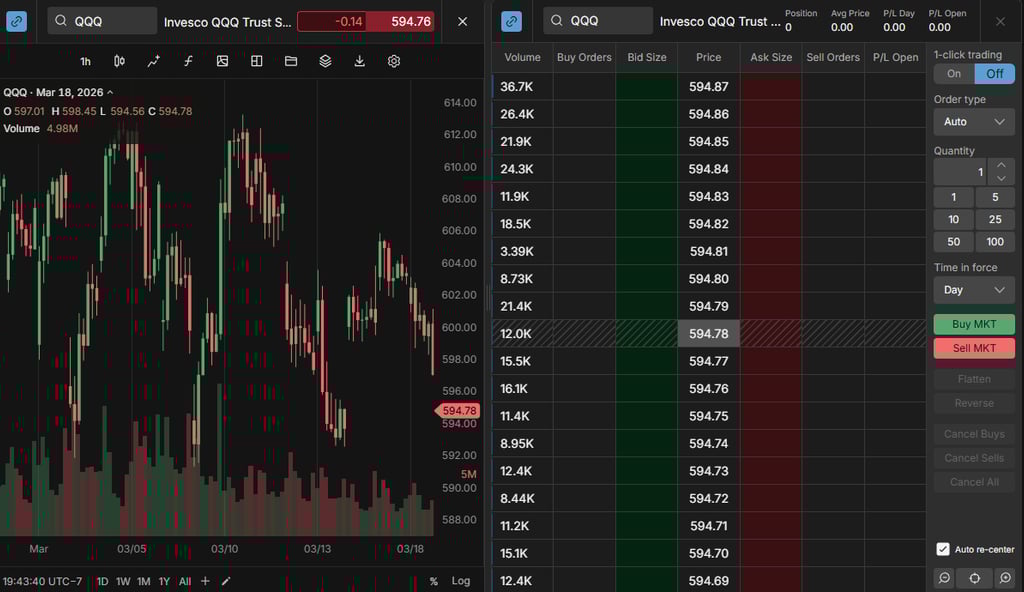
Screenshot from TastyTrade.com
The information provided in this article is for educational and informational purposes only and should not be construed as personal financial, investment, or legal advice. Options trading involves substantial risk and is not suitable for all investors. You could lose more than your initial investment. The strategies, examples, and calculations discussed are based on the author's personal experience and research. Your results may vary significantly based on market conditions, individual circumstances, and risk tolerance. Past performance does not guarantee future results. By reading this article, you acknowledge that you are solely responsible for your own investment decisions and any consequences that may result.
Garrett Duyck is the founder of CheatCode Wealth and the writer behind the Portfolios & Bedtime Stories newsletter. He writes for employed people who want to build wealth without quitting their job, burning out, or missing out on life. Garrett is a former contributor to Seeking Alpha, where he built an audience of more than 4,000 readers, and he has published more than 140 articles about investing, passive income, and personal finance. He was among the top 20% of analysts according to TipRanks.
He has built a portfolio of income-producing assets that generates more than $50,000 per year in passive income, and he and his wife have paid off more than $180,000 in non-mortgage loans while raising four children. Garrett grew up in poverty, became a first-generation college graduate, and believes the best money strategies are the ones real families can actually stick with over time.
Educational Disclosure: CheatCode Wealth content is for educational and informational purposes only. It is based on personal experience, research, and firsthand investing practice. It is not personalized financial, legal, tax, or investment advice. Always perform your own due diligence and consult with a licensed professional before making significant financial decisions.
Affiliate Disclosure: To support the site, some links in our articles may be affiliate links. If you click on these and make a purchase, CheatCode Wealth may receive a small commission at no additional cost to you. We only recommend tools and services that Garrett has personally used or thoroughly vetted for the CheatCode community.
New to CheatCode Wealth? Start with our Paycheck-to-Passive guide to see how we build the foundation.
Connect & Explore:
Learn more about Garrett · Explore wealth-building tools · Garrett’s Seeking Alpha Archive · Connect on LinkedIn


About the Author
Subscribe to the newsletter and get a free copy of 101 Money Cheat Codes:
Spam-free. Unsubscribe anytime.
CheatCode Wealth™
Build your wealth. Keep your life.
© 2025. All rights reserved. Cheatcode Wealth LLC. This webpage may contain paid affiliate links.