
Passive Income: Definition, Examples & Ideas for Employees

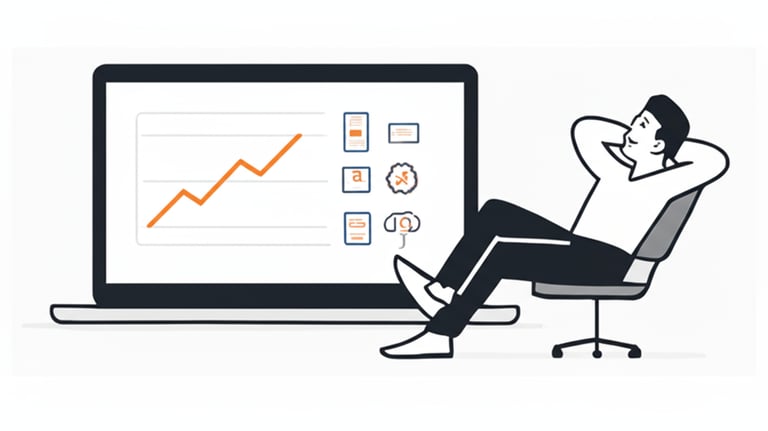
Learn how to make your money work for you.
💡 What you’ll learn in this guide:
A clear definition of passive income and the three rules that define it.
Practical starter steps you can do this week to create recurring income.
Introduction to the seven income‑producing asset classes.
The difference between passive income and non-passive income
What is passive income and active income
Most people know what passive income is supposed to feel like — money coming in while you're not working. What they don't have is a clear picture of what actually creates it.
The popular framing "make money while you sleep" sounds great, but it's incomplete. It tells you the destination without giving you the address. It names the result without explaining the mechanism behind it. And when you don't understand the mechanism, you spend years chasing things that look like passive income but aren't.
What Is Passive Income? The Operational Definition
The standard definition of passive income "money you earn without actively working" isn't wrong. But it isn't operational. It describes the outcome, not the action required to produce it.
The missing action in almost every passive income definition: deploying an asset.
Here is the operational definition developed through the CheatCode Wealth framework:
Passive income is the deployment of income-producing assets.
And the refined version:
Good passive income is the intentional deployment of assets, consistently, to earn income without you.
That distinction matters more than it sounds. Driving Uber is not passive income. Until your car drives without you, its non-passive. Every dollar earned requires another hour behind the wheel. The moment you stop driving, the income stops, that is active income with a flexible schedule.
Rental income can be passive income. The asset, the property or equipement, generates rent. Dividend income is passive income. The asset, the equity position, generates the distribution. Newsletter sponsorship revenue can be passive income. The asset, the audience and content archive, generates the sponsorship.
The asset does the work. You own the asset.
The byproduct of building passive income correctly is a set of assets that continue to produce value without you.
Deploying assets is what you do. Passive income is what you get.
Ask yourself this question: "What asset can I build, deploy, and let produce value without my constant involvement?" That's the reframe that changes how you think about income — and how you build it.


The three rules of passive income
Rule 1 — It comes from an asset.
The income is generated by something you own or have built — not by your time. The asset can be financial (stocks, bonds), physical (rental property), or content-based (a website, newsletter, or book). No asset, no passive income.
Rule 2 — It is recurring and sustainable.
The asset produces income repeatedly over time. A one-time payment doesn't qualify. Quarterly dividends from a stock portfolio do. The income is predictable and repeatable — you don't restart the engine each time it pays.
Rule 3 — It requires minimal ongoing effort.
You could step away for an extended period and the income would continue. This doesn't mean zero effort — assets require occasional review, maintenance, and optimization. But your daily presence is not required to keep the income flowing.
There are three rules that separate passive income from active income. They are:
"Passive Income is the ultimate wealth cheat code because its the only way to buy back your time."
Passive Income vs Active Income
The clearest way to understand passive income is by contrasting it with active income — the income most employees have spent their entire career producing.
Active income is earned by showing up and doing the work. A salary, an hourly wage, a consulting fee — these are all active income. The exchange is direct: service/labor for money. And that exchange has a hard ceiling. There are only so many hours in a day, and each one traded for income is one that can't be traded again.
Passive income removes that ceiling. When income comes from a deployed asset rather than your presence, the asset doesn't punch a time clock. It produces whether you're at your desk, sleeping, on vacation, or spending a Saturday afternoon with your family.
The mathematical difference is significant. Active income scales linearly with time — more hours yields slightly more money, up to a fixed limit. Passive income scales with assets. The more assets deployed, the more income streams flow — without additional hours from you.
This is why building passive income alongside a full-time job is one of the most powerful wealth-building strategies available to employees. Your salary handles today's expenses. Your growing asset portfolio handles tomorrow's freedom.


Passive Income, Non-Passive Income, and Residual Income — Clearing Up the Terms
These terms get used interchangeably online, especially in Reddit threads and personal finance forums, but they are not identical. Understanding the distinctions matters, both for taxes and for building the right mental model.
Passive Income vs Non-Passive Income
The IRS defines "passive income" narrowly: income from rental activities, or from a business in which you do not materially participate (such as a limited partnership). Under this strict definition, dividend and interest income is actually classified separately as "portfolio income" — technically not passive income in the IRS sense.
"Non-passive income" in IRS terminology is any income from a business where you do materially participate — including wages, self-employment income, and most active business involvement. It is the IRS's term for active income.
For tax filing purposes, this classification matters because passive income losses have different treatment than non-passive losses. If you are investing in real estate or limited partnerships, the passive/non-passive distinction directly affects your tax return.
The CheatCode Wealth operational definition is broader and more useful for wealth-building:
Income qualifies as passive if it meets the three rules above — it comes from an asset, it's recurring, and it requires minimal ongoing effort. That includes dividend income, rental income, interest income, royalties, and digital asset revenue — regardless of how the IRS classifies each for tax purposes.
Residual Income
"Residual income" is often used interchangeably with passive income, but the emphasis differs slightly. Residual income typically refers to income that keeps coming from work you have already completed — royalties from a book written three years ago, recurring commissions on a policy renewed annually, or licensing fees on software built once and maintained minimally.
Both residual income and passive income describe income that outlasts the effort that created it. In the CheatCode Wealth framework, they are functionally equivalent — both come from deployed assets, and both satisfy the three-rule test.


Passive Income Examples — What It Actually Looks Like in Practice
Understanding the definition is step one. Seeing what it looks like across real asset classes makes it concrete and actionable.
From financial assets (equity and debt):
Dividend payments from individual stocks, dividend ETFs, or sector funds
Quarterly distributions from REITs (real estate investment trusts)
Interest from bonds, treasury bills, CDs, or high-yield savings accounts
Interest income from private notes or peer-to-peer lending platforms
From physical assets:
Monthly rent from a residential or commercial rental property
Equipment rental income (tools, machinery, specialty gear)
Vehicle rental income through platforms like Turo
From digital and content assets:
Display ad revenue from a niche website or content blog
Affiliate commissions from embedded product links in content
Newsletter sponsorship income — Garrett Duyck's Portfolios & Bedtime Stories™ is a real-world example of this model, built alongside a full-time federal job
Revenue from digital products: templates, guides, downloadable tools
From intellectual property:
Book or ebook royalties from self-publishing (e.g., Amazon KDP)
Online course revenue from a recorded curriculum hosted on Teachable or Gumroad
Patent licensing fees
From risk-based strategies:
Options premium income from covered call or cash-secured put strategies (see the Risk Asset Class)
Every one of these examples passes the three-rule test: the income comes from a deployed asset, it is recurring, and it does not require daily active involvement to maintain.
Garrett Duyck built over $50,000 in annual passive income from a combination of equity income, content assets, and newsletter revenue — while working full-time as a federal employee and raising four kids. The question that started the process was not "how do I get rich quick?" It was: "What asset can I deploy this week?"
Passive Income Ideas for Employees — Where to Start
Knowing what passive income is and knowing where to start are two different problems. The most common barrier isn't knowledge — it's not knowing which starting point is realistic given your current income, time, and skill set.
The CheatCode Wealth 7 Classes of Income-Producing Assets framework organizes passive income opportunities by asset type. Each class has different tradeoffs. Most employees will find at least two classes where they already have a natural starting advantage.
High-signal starting points by situation:
If you have savings but limited time: Start with equity or debt assets. A dividend-paying ETF portfolio or bond ladder generates passive income with minimal ongoing management — and every dollar invested is a dollar working without you.
If you have knowledge or expertise but limited capital: Start with digital or intellectual assets. A newsletter, niche website, or self-published book requires time and knowledge, not significant capital. These take longer to produce income but build durable assets.
If you have a stable full-time income: Use it as the foundation. Your paycheck is the engine that funds asset acquisition. The Paycheck-to-Passive™ method is built on exactly this principle — systematically redirecting a portion of active income into passive income-producing assets over time.
→ Use the Freedom Time Calculator — Find the passive income target you're building toward so every deployed asset has a concrete destination.
→ Find Your Newsletter Niche — If digital assets are your starting path, this tool surfaces the newsletter angle that fits your background.


Passive Income Investments — The Financial Asset Approach
For employees who want to start with financial assets, passive income investments are the most accessible entry point. No product to build, no property to manage — just capital deployed into assets that pay income on a schedule.
Dividend stocks and ETFs. Companies and funds that pay regular dividends distribute a portion of earnings directly to shareholders. A thoughtfully constructed dividend portfolio can generate 2–5%+ in annual income. The income continues and compounds as long as the position is held and dividends are reinvested — each dividend payment buys more shares, which pays more future dividends.
REITs (Real Estate Investment Trusts). REITs allow employees to own a fractional stake in large-scale real estate portfolios without buying a physical property. They are legally required to distribute at least 90% of taxable income to shareholders — making them one of the most consistent passive income investments available through any standard brokerage account.
Bonds, CDs, and high-yield savings. Debt instruments pay regular interest. Lower yield than equity, but more predictable and lower-volatility. A bond ladder or CD strategy produces consistent passive income with essentially zero day-to-day management.
Index funds. While technically equity, index funds provide broad market exposure with minimal fees and no active decision-making required. For employees building a long-term passive wealth base, consistent index fund investing remains one of the most efficient strategies available.
The important distinction between passive income investing and speculative investing: the goal is not the highest return in any given year. The goal is sustainable, recurring income from deployed assets — income that continues flowing without requiring daily attention or active management.
Related: The Hidden Cost of Stock Investing →
Related: Collateral Backed Options (CBOs) →
What Reddit Gets Wrong About Passive Income
Passive income gets discussed constantly online, in Reddit communities like r/passive_income and r/financialindependence, in personal finance YouTube channels, and across finance blogs. At least half of the posts in the r/passive_income community is not actually passive income because they fail one or more of the three rules. In those discussions, a handful of persistent myths keep circulating.
Myth 1: "Passive income means no work."
This is the most damaging misconception. Every source of passive income requires upfront work. A rental property requires acquisition, setup, and ongoing management decisions. A dividend portfolio requires capital accumulation and periodic portfolio review. A newsletter requires writing, audience-building, and sponsor relationships. The "passive" label refers to the income stream — it flows without your constant active involvement once the asset is deployed. The asset did not materialize from nothing. The work built the asset; the asset pays the income.
Myth 2: "You need a lot of money to start."
True for some asset classes (physical real estate has a high capital floor). False for others. Building a newsletter, writing a book, or launching a digital product requires time and knowledge — not significant starting capital. An equity portfolio starts with whatever you can invest, even $50 a month. The asset class you start with should match what you actually have to deploy right now.
Myth 3: "Passive income is a scam or too good to be true."
Passive income is real. Dividends have been paid by companies for over a century. Real estate has generated rental income for longer than that. The skepticism usually comes from conflating legitimate passive income with the schemes marketed as passive income: MLM programs, dropshipping promises, and low-quality "passive income course" sales funnels. Real passive income is slower, less exciting, and built from verifiable assets — not from convincing others to buy a program.
Myth 4: "You have to quit your job to build passive income."
This is the opposite of how most people actually build it. The job provides the capital, the stability, and the time to build assets without financial pressure. Passive income grows alongside the job — not instead of it. The goal is reaching the Freedom Number — the passive income level at which work becomes optional — while staying employed and financially stable until you get there.
Myth 5: "Any income that doesn't come from a job is passive income."
People talk about driving uber, creating content, and a variety of solopreneur activites that earn income and refer to them as "passive." Usually, they do not involve an asset and when they do they are not hands-off passive.
The 7 Classes of Income-Producing Assets
Every source of passive income can be placed into one of seven asset classes. The CheatCode Wealth framework uses these classes to organize passive income building — each has distinct tradeoffs of startup capital, time to first income, and skill required.
Physical — Tangible property that generates rental or usage income. Highest startup capital of any class but strong long-term appreciation potential alongside income. Examples: rental real estate, equipment rental, vehicle rental.
Digital — Online platforms and content that generate traffic-based or subscription revenue. Low startup capital, rewards consistent content effort and specialized knowledge. Examples: niche websites, newsletters, SaaS tools, digital products.
Intellectual — Ideas, expertise, and knowledge packaged into sellable formats. Low capital required, highest leverage on what you already know. Examples: books, online courses, patents, licensing agreements.
Artistic — Creative works that generate royalties or licensing fees over time. Accessible to anyone with creative output worth protecting and distributing. Examples: music licensing, photography, original artwork.
Debt — Money lent to others in exchange for regular interest payments. Lower yield than equity but higher predictability. Examples: bonds, CDs, treasury bills, private notes.
Equity — Ownership stakes in companies or assets that pay distributions. The most accessible entry point for employees with existing investment accounts. Examples: dividend stocks, index funds, REITs.
Risk — Income earned by accepting or managing risk. Requires more sophistication but can meaningfully enhance yield on existing equity positions. Examples: covered call options, cash-secured puts.


Which asset class is right for you?
We categorize income-producing assets into seven practical classes. Each has tradeoffs of time, capital, and risk. Your skill set offers distinct advantages for each type. Read the full hub for the breakdown and detailed explorations: 7 Classes of Income‑Producing Assets.
Quick picks:
Low time / low skill: Debt Asset Class (bonds, CDs, notes)
Low time / higher scale: Digital Asset Class (monetized sites, SaaS)
High capital / moderate skill: Physical Asset Class (rental property)

Frequently Asked Questions
What is the difference between passive income and active income?
Active income is earned by directly trading time for money — salaries, wages, consulting fees, and freelance work are all active income. When you stop working, the income stops. Passive income comes from a deployed income-producing asset. The asset generates income without requiring your direct, ongoing presence. The key test: does the income continue if you're not there? If yes — that's passive income.
What is passive income vs non-passive income?
In IRS terminology, "non-passive income" refers to income from a business or activity where you materially participate — wages, self-employment income, and active business involvement. "Passive income" in the IRS sense is narrower than the common usage: it covers rental income and income from businesses you don't actively participate in. The CheatCode Wealth operational definition is broader — any recurring income from a deployed asset that meets the three-rule test qualifies as passive income, regardless of IRS category.
What is passive income and nonpassive income from a tax perspective?
For tax purposes, passive and non-passive income are treated differently. Passive losses can generally only offset passive income — they cannot reduce your active W-2 wages. Non-passive income is taxed as ordinary income. Understanding this distinction matters if you have rental real estate at a loss or invest in limited partnerships. Consult a tax professional for specifics on your situation.
What is residual income, and is it the same as passive income?
Residual income refers to income that continues from work already completed — book royalties, recurring commissions, software licensing fees. It's a subset of passive income, with the emphasis on the continuation of income from a past effort. The CheatCode Wealth framework treats them as functionally equivalent — both come from deployed assets and both meet the three-rule test.
What are the best passive income investments for beginners?
For employees just starting, dividend-paying ETFs, index funds, and REITs are the most accessible entry points — they require only a brokerage account and consistent capital contribution. High-yield savings accounts and CDs provide even lower-risk income for capital not yet ready for equities. The best starting investment is the one you can commit to funding consistently, not the one with the highest theoretical return.
What are realistic passive income ideas for employees?
The most actionable starting points depend on what you have most of — time, knowledge, or capital. If knowledge: a newsletter, niche website, or digital product. If capital: dividend stocks, REITs, or bond instruments. If expertise: a self-published book or recorded online course. The goal is matching your current resources to the asset class that extracts the most passive income from what you already have.
How long does it take to build meaningful passive income?
It varies by asset class. Dividend income starts immediately with the first investment and compounds with reinvestment. A newsletter typically reaches meaningful sponsorship income at 1,000–2,000 subscribers — usually 3–12 months of consistent publishing. A niche content website can take 6–18 months to qualify for and generate ad network income. The consistent truth across every asset class: it takes longer than expected, and it compounds more than expected.
Do you need a lot of money to start building passive income?
No — but you need something. Physical real estate requires significant capital. Digital and intellectual assets require more time than money. An equity portfolio can start with any amount and grow from there. The barrier is almost never the absence of capital alone. It is usually the clarity of knowing which asset class fits your current situation — and the discipline to keep deploying into it.
Is passive income actually passive?
The income is passive — it flows from the deployed asset without requiring your daily presence. The asset itself requires upfront work to build or acquire, and periodic maintenance to sustain. "Passive income" does not mean "effortless income." It means income that does not scale linearly with your time. The asset works; you own the asset.
What are the 7 Classes of Income-Producing Assets?
The CheatCode Wealth framework identifies seven categories: Physical, Digital, Intellectual, Artistic, Debt, Equity, and Risk. Each has distinct tradeoffs of capital required, time to first income, and skill needed. Most employees find their best starting points in the equity, debt, digital, or intellectual classes — accessible entry points with realistic income potential that doesn't require quitting a job to pursue.
How does passive income fit into the Paycheck-to-Passive™ method?
The Paycheck-to-Passive™ method is the CheatCode Wealth framework for systematically converting active income into passive income-producing assets. The paycheck is the engine — it funds asset acquisition. Each paycheck deployed into income-producing assets adds to a growing portfolio. Over time, that portfolio grows toward the Freedom Number: the passive income level at which work becomes optional. The goal is not to quit your job. The goal is to make staying entirely your choice.
CheatCode Wealth™
Build your wealth. Keep your life.
© 2025. All rights reserved. Cheatcode Wealth LLC. This webpage may contain paid affiliate links.