
Free Money Cheat Sheets
Level-Up Your Finances with Cheat Sheets Built for Busy Employees
These products are for educational purposes only and is not financial advice. Please review our terms and conditions before downloading. Consult with a financial advisor before making any financial decisions.
Download each cheat sheet using the email fields at the foot of each sheet.
These four money cheat sheets were designed to give you clear, actionable frameworks you can implement immediately. Each sheet condenses complex personal finance topics into simple visuals, tables, and step-by-step plans.
Whether you’re trying to build an emergency fund, pay off credit card debt faster, understand compound interest, or maximize tax-advantaged accounts, these guides provide the exact strategies used by people who have achieved financial freedom.
The 4 Money Cheat Sheets Included
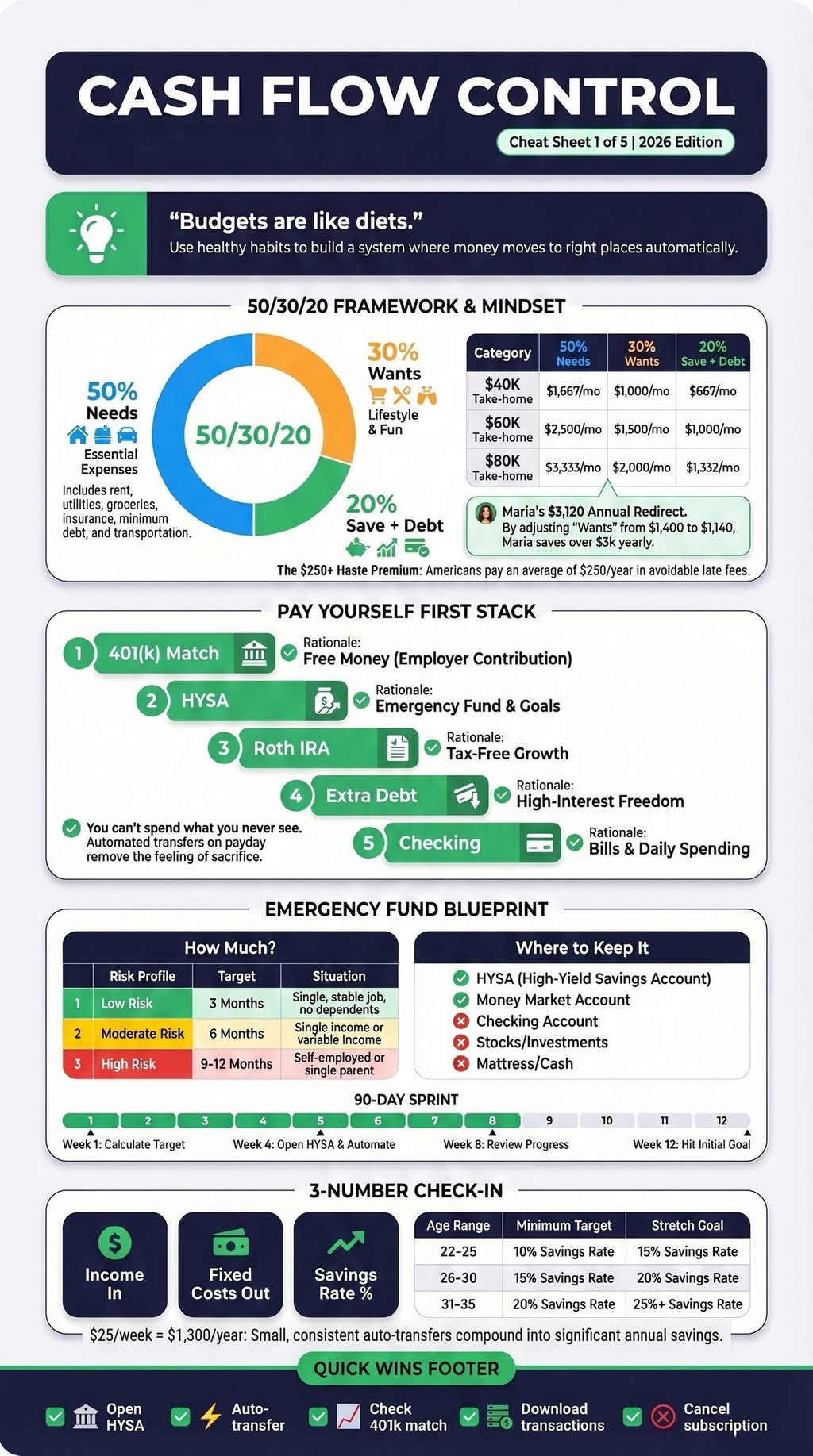
1. Cash Flow Control Cheat Sheet
Master your monthly money flow with the proven 50/30/20 framework and a “Pay Yourself First” priority stack.
Key sections include:
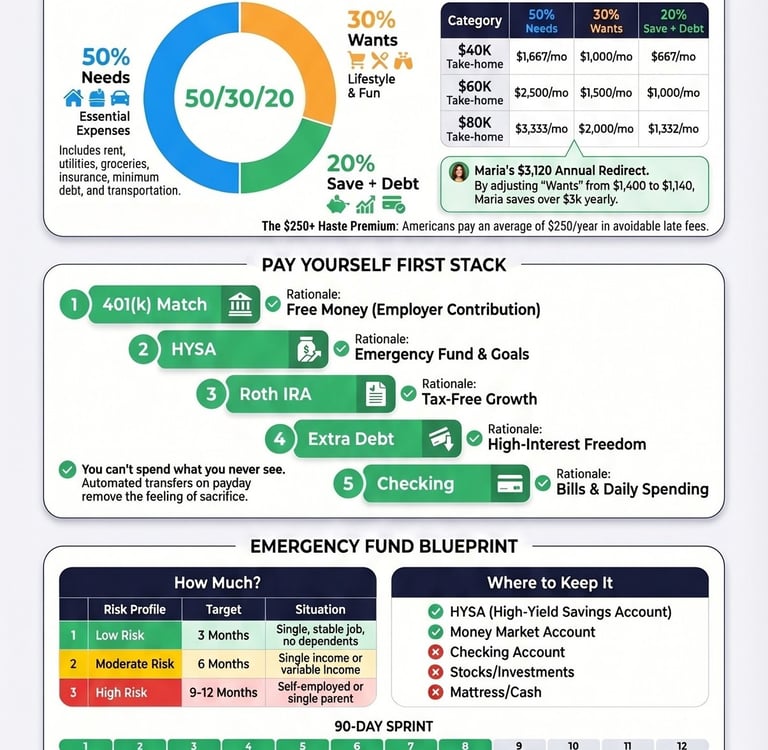
50/30/20 budget breakdown with real dollar examples
5-step Pay Yourself First order (401(k) match → HYSA → Roth IRA → Extra debt → Checking)
Emergency fund targets by risk level
90-day sprint timeline
3-number check-in system for ongoing progress
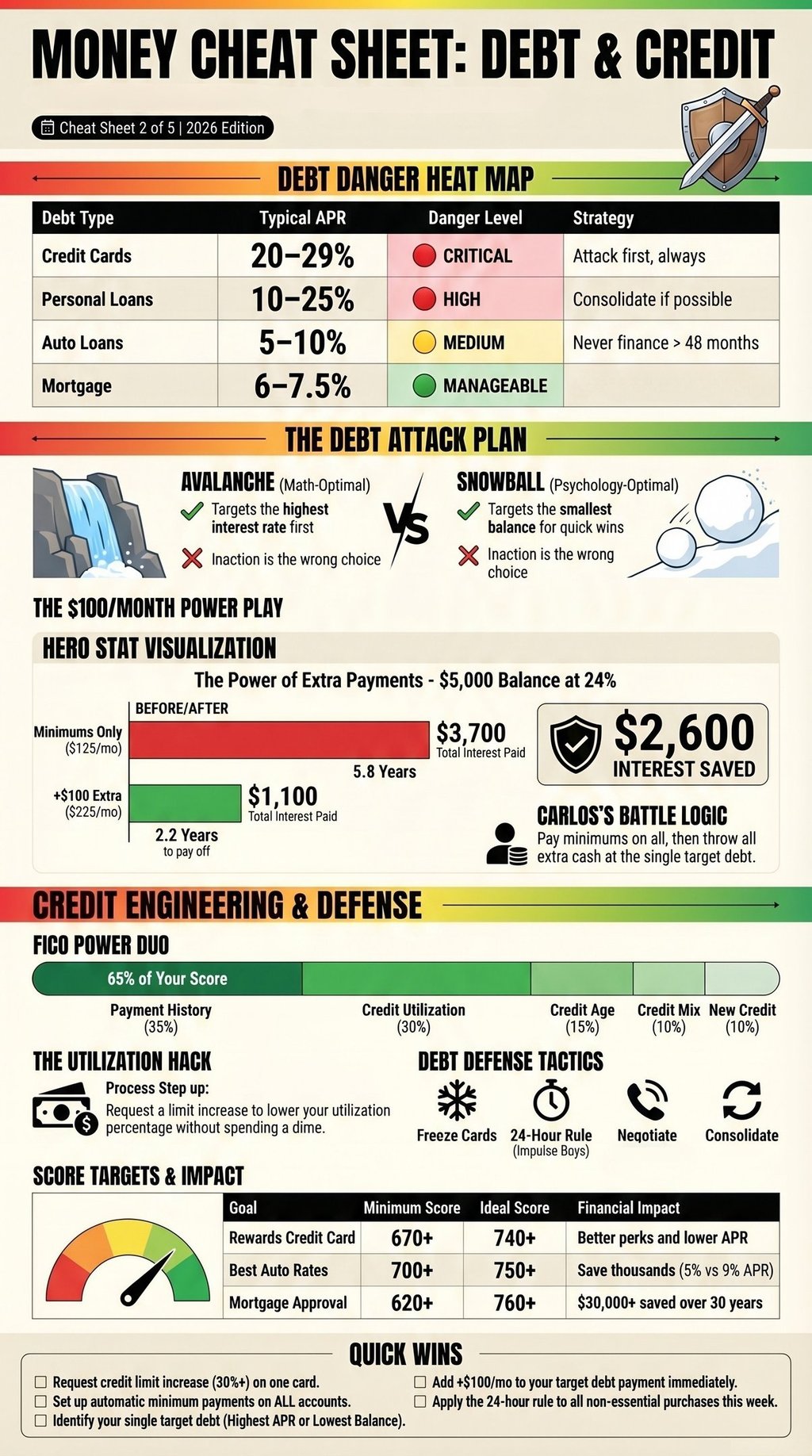
2. Debt & Credit Cheat Sheet
Learn how to attack debt strategically and protect your credit score.
Key sections include:
Debt Danger Heat Map (APR ranges and danger levels)
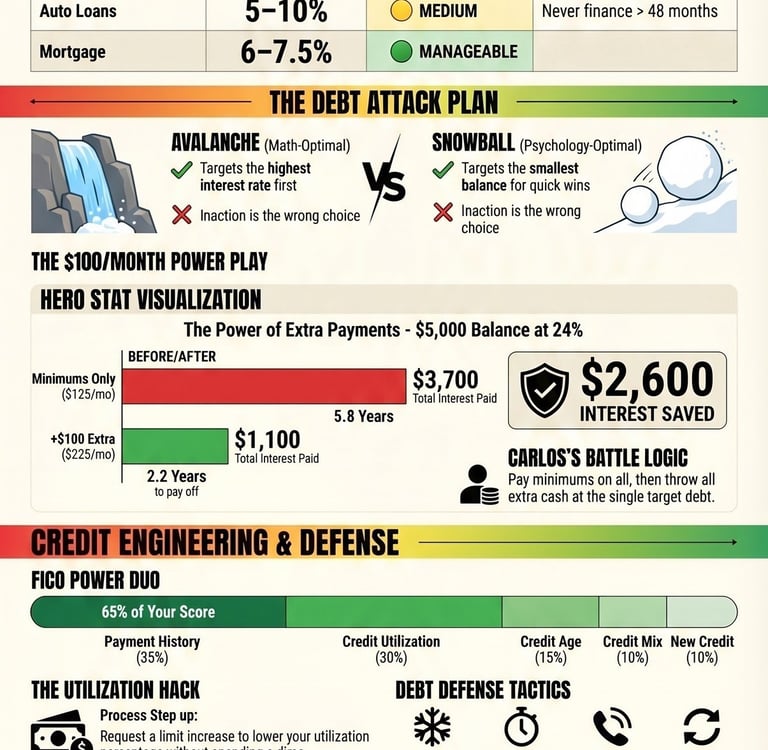
Debt Avalanche vs. Snowball comparison
The $100/month power play example
FICO score breakdown and utilization hack
Credit defense tactics and score targets for rewards, auto loans, and mortgages
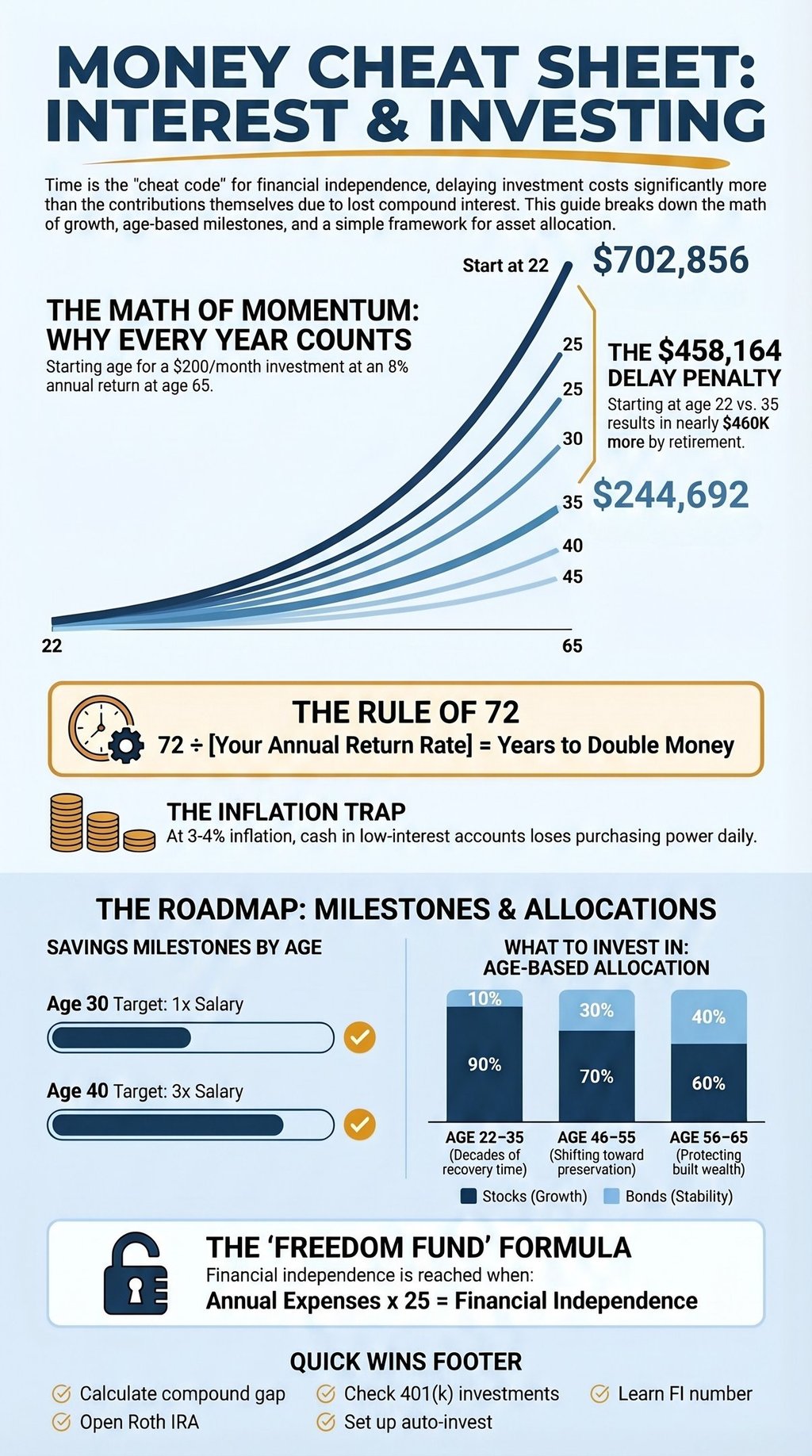
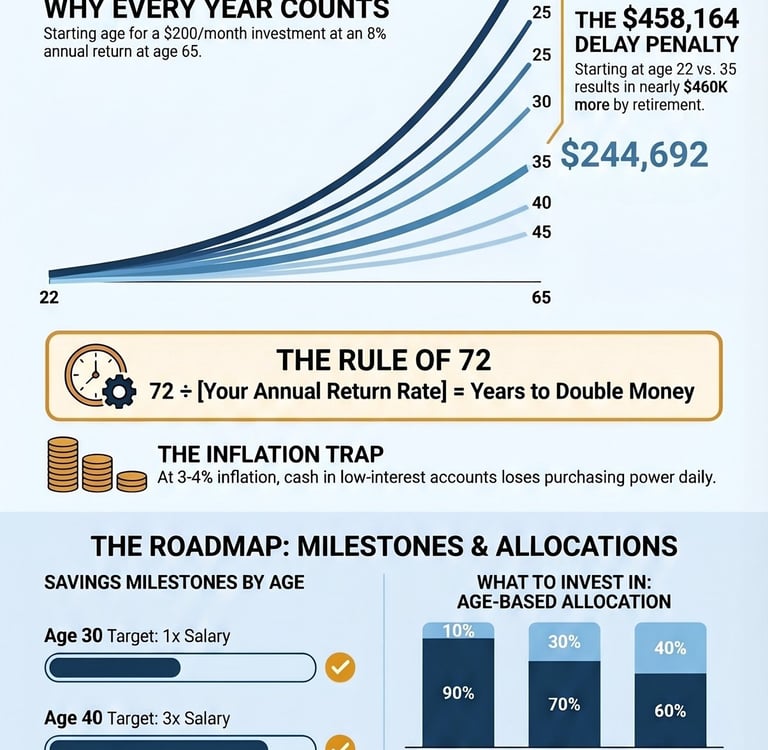
3. Interest & Investing Cheat Sheet
Understand the true power of time and compound growth.
Key sections include:
The Math of Momentum (starting at age 22 vs. 35)
Rule of 72 explained
Inflation trap warning
Savings milestones by age (1× salary at 30, 3× at 40)
Age-based asset allocation
Freedom Fund Formula (25× annual expenses)
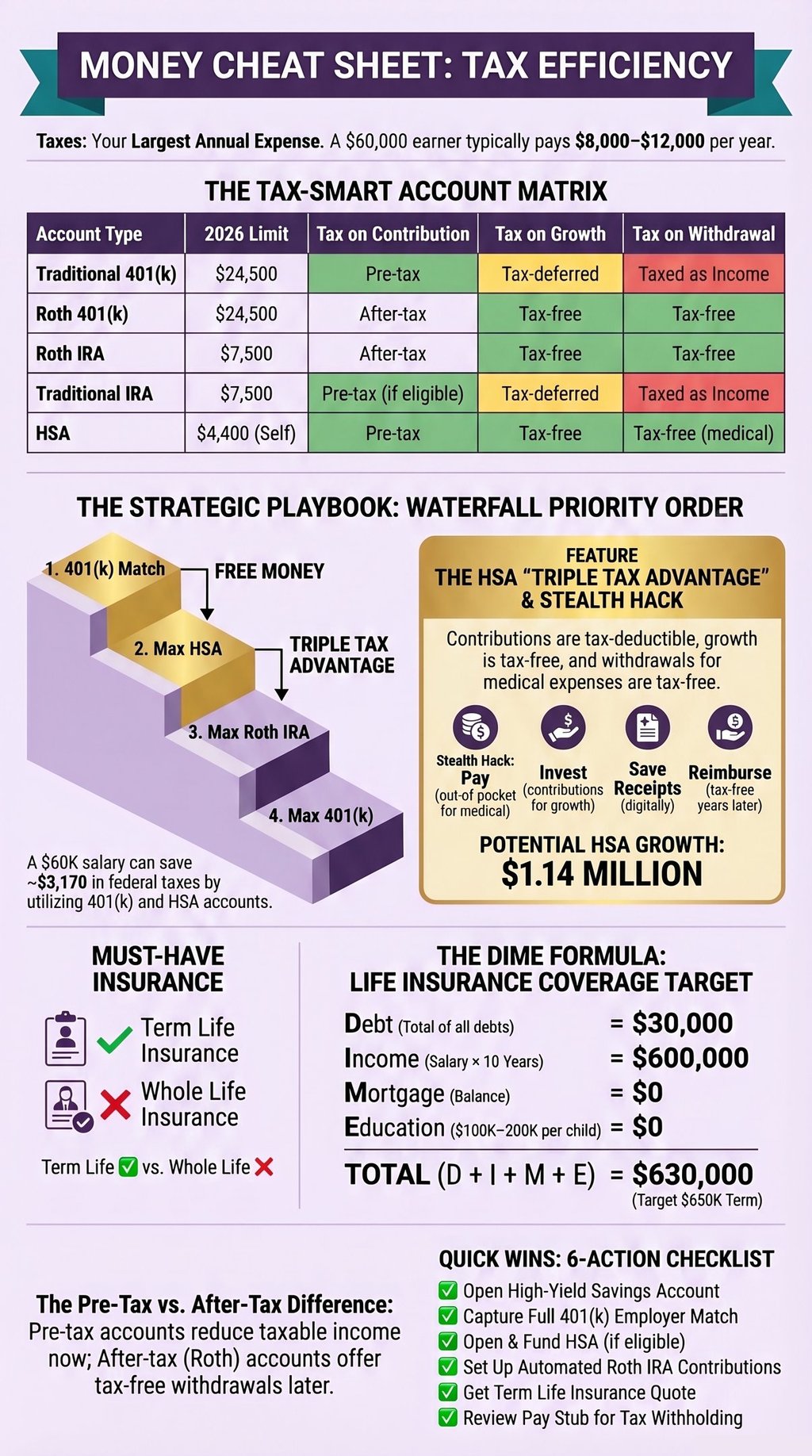
4. Tax Efficiency Cheat Sheet
Minimize your largest annual expense with smart account choices.
Key sections include:
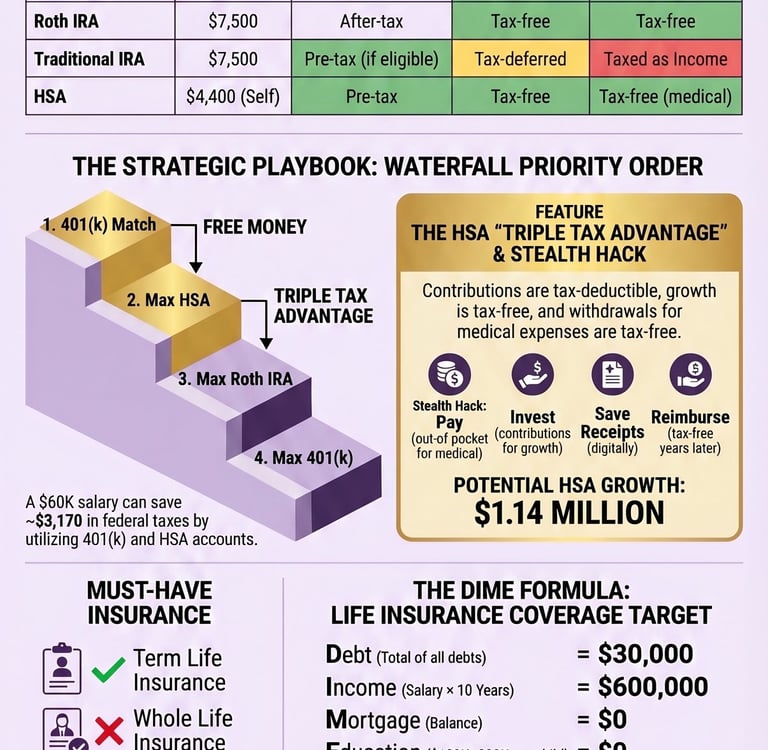
Tax-Smart Account Matrix (Traditional 401(k), Roth 401(k), Roth IRA, HSA)
Strategic Waterfall Priority Order
HSA Triple Tax Advantage and stealth hack
Term life vs. whole life insurance comparison
DIME Formula for life insurance coverage
6-action quick wins checklist
Why These Cheat Sheets Work
Visual and scannable — perfect for quick reference
Based on proven financial principles (50/30/20, debt avalanche, Rule of 72, HSA triple tax advantage)
Include specific dollar examples and targets
Designed for 2026 tax limits and current economic conditions
Printable and mobile-friendly
How to Get Your Free Cheat Sheets
Enter your email below each cheat sheet to receive instant access. You’ll also join our newsletter for weekly money tips, new frameworks, and updates.
FAQ
What is the 50/30/20 budget rule?
The 50/30/20 rule allocates 50% of income to needs, 30% to wants, and 20% to savings and debt repayment.
Should I use the debt avalanche or debt snowball method?
The avalanche method saves the most money by targeting highest-interest debt first. The snowball method provides psychological wins by paying smallest balances first.
What is the Rule of 72?
Divide 72 by your expected annual return rate to estimate how many years it takes for your money to double.
What is the Freedom Fund Formula?
Multiply your annual expenses by 25 to calculate the amount needed for financial independence.
Why is an HSA so powerful?
An HSA offers triple tax advantages: tax-deductible contributions, tax-free growth, and tax-free withdrawals for medical expenses.
How much should I have in an emergency fund?
Most people should aim for 3–6 months of expenses. Higher-risk situations may require 9–12 months.
What is the best order for retirement accounts?
Capture your full 401(k) employer match first, then max an HSA (if eligible), then max a Roth IRA, then max the rest of your 401(k).
CheatCode Wealth™
Build your wealth. Keep your life.
© 2025. All rights reserved. Cheatcode Wealth LLC. This webpage may contain paid affiliate links.