
5 AI Prompts for Personal Finance That Work Like Having a Financial Advisor in Your Pocket
Discover 5 copy-paste AI prompts for personal finance that help you budget, pay off debt, analyze spending, and make smarter money decisions—no expensive advisor needed.
ARTIFICIAL INTELLIGENCEPERSONAL FINANCE
Garrett Duyck
3/1/20266 min read
Quick Navigation: Explore the blog | Active Income | Passive income | job SHaming | Stairstep retirement


Managing your money can feel overwhelming, and I get it. Between tracking expenses, figuring out how to pay off debt faster, and trying to make smart investment decisions, it sometimes feels like you need a finance degree just to keep your head above water. The traditional solution has always been to hire a financial advisor, but that's expensive and often feels out of reach for people who are still building their wealth.
Here's the good news: technology has leveled the playing field in ways that weren't possible even a few years ago. AI tools like ChatGPT, Claude, ChatLLM, Deep Agent, and others can now provide assistance that used to cost hundreds of dollars per hour. You just need to know how to ask the right questions.
That's what this article is about. I'm going to share five AI prompts for personal finance that I've refined over time, each designed to give you actionable information you can use immediately. Think of these prompts as having a financial advisor in your pocket who's available 24/7.
These aren't vague prompts that give you generic advice. They're specific, detailed, and designed to get you real answers based on your actual situation.
Why Use AI for Personal Finance?
Before we dive into the prompts, let's talk about why AI makes sense for financial planning.
The benefits are real: AI is free (or very affordable), available whenever you need it, and completely judgment-free. You can ask embarrassing questions about your financial situation without worrying about what others think of you. And because you're providing your specific numbers and circumstances, the analysis is personalized to your actual life.
What AI does well: It's excellent at analysis, calculations, and breaking down complex decisions into manageable pieces. It can run scenarios, compare options, and explain concepts in plain language without making you feel stupid.
What AI isn't: It's not a replacement for professional advice on complex tax situations, estate planning, or legal matters. It also cannot make decisions for you. For those things, you still need a human expert. But for everyday financial analysis and research, AI is a powerful tool that ordinary people can use to make better financial decisions.
Prompt #1: Monthly Budget Builder
Building a budget sounds simple until you actually try to do it. You have income coming in, expenses going out, debt payments to consider, and financial goals you're trying to reach, and somehow you need to make all of those numbers work together.
This prompt helps you create a realistic budget that accounts for everything in your financial life. It doesn't give you a generic template; it builds a framework around your actual numbers and situation.
How to use it: Be honest with your numbers. The more accurate your inputs, the more useful the output. Expect the AI to ask clarifying questions, and that's a good thing because it means you'll get more tailored advice.
Prompt #2: Debt Payoff Strategy
Debt is one of those things that can feel impossible to escape when you're in the middle of it. You know you need a plan, but figuring out whether to tackle the smallest balance first or the highest interest rate requires math that most of us don't want to do on our own.
This prompt analyzes your debts and creates a month-by-month payoff plan that shows you exactly when you'll be debt-free and how much interest you'll save along the way.
Pro tip: Run this prompt twice with different extra payment amounts to see how paying just $100 more per month could change your payoff timeline. The results are often eye-opening.
Prompt #3: Spending Pattern Analysis
Most of us have no idea where our money actually goes. We know the big categories like rent and car payments, but the smaller stuff adds up in ways that are hard to see until someone points them out.
This prompt turns your bank statement into actionable insights by finding the spending leaks you didn't know you had.
What to expect: The AI will likely find subscriptions you forgot about, patterns in your discretionary spending, and specific areas where small changes could free up meaningful money each month. Be careful not to share sensitive information such as bank account numbers and social security numbers.
Prompt #4: Investment Strategy for Beginners
Investing feels intimidating when you're starting from zero. The jargon alone is enough to make most people give up before they begin, and the fear of making a mistake with your money is real.
This prompt breaks down investing into simple, actionable steps that are appropriate for your specific situation and goals.
My take: The best part about this prompt is the "use simple language" instruction. It forces the AI to explain things in a way that actually makes sense instead of hiding behind financial jargon.
Prompt #5: Financial Decision Evaluator
Big financial decisions are stressful because the stakes are high and the right answer isn't always obvious. Should you buy a house or keep renting? Take the higher-paying job that requires more travel? Pay off debt faster or invest more?
This prompt helps you think through major decisions by analyzing both the financial and non-financial factors.
Why this matters: Financial decisions aren't just about the numbers. They're about how those numbers affect your life, your family, and your peace of mind. This prompt forces that broader thinking.
How to Get the Most Out of These Prompts
These prompts are powerful, but they work best when you use them intentionally. Here are a few tips:
Be specific with your numbers. Vague inputs produce vague outputs. The more detail you provide, the more useful the response will be.
Be honest about your situation. AI doesn't judge, so don't hide the uncomfortable parts of your financial picture. You'll get better advice if you're upfront about everything.
Ask follow-up questions. The first response is a starting point, not the final answer. Push back, ask for clarification, and dig deeper into areas that matter most to you.
Use the outputs as starting points. AI gives you frameworks and analysis, but you still need to apply judgment and make decisions that fit your specific life.
Combine prompts for comprehensive planning. Use the budget prompt first, then the spending analysis, then the debt payoff strategy. Together, they give you a complete picture.
Start With One Prompt Today
Financial advice used to be something only wealthy people could afford. These AI prompts for personal finance change that equation by giving everyone access to specific analysis that would have cost hundreds of dollars just a few years ago.
You don't need to be a finance expert to make smart decisions with your money. You just need the right tools and the willingness to ask good questions.
Pick one prompt from this article and try it today. Copy it, paste it into ChatLLM, Deep Agent, ChatGPT, or Claude, fill in your numbers, and see what you get. You might be surprised at how much clarity a single conversation can provide.
The AI Tool I Prefer
I use AI tools every day to help with my business, personal finance, and so much more. AI models are efficient research tools, reducing the task time to a fraction of what it used to be. My favorite AI tools are ChatLLM and Deep Agent by Abacus.AI. It is the best one-stop place to work on all of my AI tasks, including image generation, coding, and complex analysis.
In particular, Deep Agent is one-of-a-kind. Deep Agent is an advanced AI agent designed to complete more complex, multi-step projects. I am shocked at the level of interpretation and critical thinking that Deep Agent displays. It excels at analyzing large volumes of data, making it ideal for analyzing an entire household's annual budget. I use Deep Agent and ChatLLM to stay on top of my personal finances and to consider different alternatives to my problems.
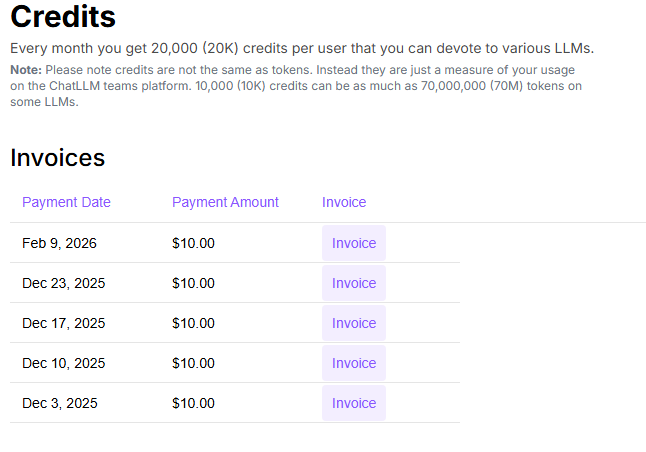
The best part is how affordable ChatLLM and Deep Agent are, making them extremely accessible to anyone. The basic subscription costs $10 per month, and the premium subscription costs $20 per month. I pay for the premium subscription, and at least a couple of times per month, I end up buying more credits at $10 each because I'm getting so much work done. It's like having an employee working for me, doing hours of work in mere minutes at the cost of a few dollars.
Sign up and give Abacus.AI a job working for you.
I may receive compensation from this affiliate link at no extra cost to you.
Garrett Duyck is the founder of CheatCode Wealth and the writer behind the Portfolios & Bedtime Stories newsletter. He writes for employed people who want to build wealth without quitting their job, burning out, or missing out on life. Garrett is a former contributor to Seeking Alpha, where he built an audience of more than 4,000 readers, and he has published more than 140 articles about investing, passive income, and personal finance. He was among the top 20% of analysts according to TipRanks.
He has built a portfolio of income-producing assets that generates more than $50,000 per year in passive income, and he and his wife have paid off more than $180,000 in non-mortgage loans while raising four children. Garrett grew up in poverty, became a first-generation college graduate, and believes the best money strategies are the ones real families can actually stick with over time.
Educational Disclosure: CheatCode Wealth content is for educational and informational purposes only. It is based on personal experience, research, and firsthand investing practice. It is not personalized financial, legal, tax, or investment advice. Always perform your own due diligence and consult with a licensed professional before making significant financial decisions.
Affiliate Disclosure: To support the site, some links in our articles may be affiliate links. If you click on these and make a purchase, CheatCode Wealth may receive a small commission at no additional cost to you. We only recommend tools and services that Garrett has personally used or thoroughly vetted for the CheatCode community.
New to CheatCode Wealth? Start with our Paycheck-to-Passive guide to see how we build the foundation.
Connect & Explore:
Learn more about Garrett · Explore wealth-building tools · Garrett’s Seeking Alpha Archive · Connect on LinkedIn


About the Author


Subscribe to the newsletter and get a free copy of 101 Money Cheat Codes:
Spam-free. Unsubscribe anytime.
CheatCode Wealth™
Build your wealth. Keep your life.
© 2025. All rights reserved. Cheatcode Wealth LLC. This webpage may contain paid affiliate links.