
Job Shaming Stories: Why I Quit a Growing Side Business
Real job shaming stories from a government employee who quit a profitable side business to get his priorities right. What I learned about family vs income.
JOB SHAMING
Garrett Duyck
5/4/20267 min read
Quick Navigation: Explore the blog | Active Income | Passive income | job SHaming | Stairstep retirement


I was making solid money. My earnings were growing every month. People told me I was "finally doing something for myself."
And then I quit.
Not because the business was failing. Not because I wasn't good at it. I quit because I realized I was chasing the wrong thing.
This is one of the job shaming stories that changed my life. It's about the pressure to prove you're more than "just" an employee and what I learned when I stopped trying to prove it.
The Side Business I Built (And Why I Started It)
A few years ago, I started freelance writing for Seeking Alpha, a platform where investors publish stock analysis. I analyzed companies, wrote detailed reports, and was paid for every article.
It felt thrilling. I was building something of my own. I was earning income outside of my government job. I was proving that I could do more than clock in and out.
At the time, I had three young kids. My government job paid well and gave me work-life balance. I was home for dinner every night. I read bedtime stories. I was present.
But I still felt pressure. Pressure from the culture around me. Pressure from the countless financial gurus and personal finance content that positioned employment as a dead end.
I wanted to prove I was more than "just" an employee.
So I started the side business. And for a while, it felt like I was winning.
The Reality Behind the Growth
The Seeking Alpha work was going well. My earnings were solid and growing. I was learning, improving, and getting positive feedback from readers.
On paper, it looked like success.
But the reality was different.
I was spending most of my free time working. Evenings after the kids went to bed. Weekends. In any spare moment, I was researching and writing.
I told myself it was worth it. I told myself I was building something important. I told myself my family would benefit in the long run.
But the truth was simpler and harder to admit: I was neglecting my family.
My wife was carrying more of the parenting load. I was missing moments with my kids. I was physically present but mentally absent, always thinking about the next article, the next deadline, the next paycheck.
I wasn't earning more than I did at my job. I wasn't building anything that would replace my income. I was just… working more. For the sake of working more.
The Moment I Realized I Had to Quit
After two years of freelance writing, I had a realization.
The side business wasn't serving my life. My life was serving the side business.
I thought about what mattered most to me:
Being present for my kids
Having energy for my life
Actually enjoying my free time instead of filling it with more work
None of those things were happening.
The freelance writing wasn't making me happier. It wasn't bringing me closer to my goals. It was just feeding the narrative that I needed to be doing more to be worth something.
That's when I understood: I was experiencing job shaming—not from others, but from myself.
I had internalized the belief that being an employee wasn't enough. That I had to build something on the side, hustle harder, and prove my worth through entrepreneurship.
So I quit the side business. Even though the income was solid and growing. Even though people thought I was crazy to walk away.
I quit because I needed to get my priorities right.
Job Shaming Stories from My Life
The pressure I felt to start that side business didn't come from nowhere. It came from years of subtle and overt job shaming. Here are a few of the stories that shaped my thinking.
My Father's Expectations
My father wanted me to avoid college and jobs entirely. He believed entrepreneurship was the only path to real success.
When I decided to go to college—becoming the first in my family to do so—he was supportive but skeptical. When I got a government job, he was polite but unimpressed.
He wanted me to start a business. To build something of my own. To avoid the "trap" of employment. He was an employee himself and was constantly grumbling about his job.
But I didn't have capital. I didn't have a clear business idea. And honestly, I didn't want the stress and uncertainty of entrepreneurship.
Going to college and getting a stable job worked out well for me. It gave me financial stability. It gave me work-life balance. It let me be present for my family.
But I still felt the weight of his expectations. The sense that I was letting him down. That I wasn't living up to my potential.
That's job shaming from family, and it's one of the hardest types to navigate.
My Friend Andy: When Culture Shapes Perception
I had a college roommate named Andy. He was from China, and after graduation, he moved back home.
We caught up on the phone one day. Andy asked what I was going to do for work. I told him I was going to work for the government to improve the environment.
Andy was impressed. In China, government jobs are highly respected and sought after. The government rewards loyal public servants, so those positions are prized.
But I had to explain to Andy that's not the case in America.
In America, people often look down on public employees. They blame them for wasteful spending. They see government work as easy or unambitious. They view it as "not a real job."
The exact same job—respected in one culture, shamed in another.
That conversation stuck with me. It showed me how arbitrary job shaming really is. It's not based on the actual value of the work. It's based on cultural narratives that are often wrong.
The Self-Shaming Loop
The worst job shaming didn't come from my father or from cultural messaging. It came from me.
I spent years trapped in a loop of negative self-talk:
"I should be doing better."
"I'm not living up to my potential unless I start a business."
"I'm letting my job hold me back."
"I'm not doing as well as the entrepreneurs I know."
"My family won't be proud of me if I just work a job."
These thoughts weren't based on reality. I had a stable career. I was paying off debt. I was investing consistently. I was building wealth.
But the self-shaming made me feel like none of that was enough.
Self-shaming is real, and it's destructive. It erodes your confidence. It prevents you from appreciating what you have. It makes you chase things that don't actually serve your life. It's often the result of internalizing cultural messages about employment, success, and worth.
Then one day, a slogan hit me like a ton of bricks: "The only people that will remember that you worked late are your kids."
I had to change.
What I Learned from Quitting
Quitting the Seeking Alpha side business was one of the best decisions I ever made.
Here's what I learned:
1. Income Isn't the Only Metric That Matters
I was earning money from the side business. But I was paying for it with my time, energy, and presence with my family.
Time is NOT money; time is more valuable than money. You can always earn more money. You can never get time back.
2. Stability Is a Feature, Not a Bug
My job gave me something the side business couldn't: predictability.
I knew when I'd work. I knew when I'd be home. I knew I could plan around my family's needs.
That stability isn't a weakness. It's a strategic advantage.
3. Employment Is Not Inferior to Entrepreneurship
Our culture treats entrepreneurship as superior to employment. But that's survivorship bias talking.
We celebrate the entrepreneurs who succeed and ignore the thousands who fail, burn out, or sacrifice everything for a dream that never pays off.
Employment offers immediate income, training, specialization, and work-life balance. For most people, it's the smarter path.
4. You Don't Have to Prove Anything
I started the side business to prove I was more than "just" an employee. But I didn't need to prove that. My job wasn't a consolation prize. It was a tool. A cheat code. A strategic choice that aligned with my values and priorities.
You don't owe anyone—including yourself—proof that you're "ambitious enough" or "entrepreneurial enough."
You're exactly where you need to be at the moment.
Key Takeaways
Job shaming pressure can drive you to start side businesses or ventures that don't actually serve your life
Quitting a profitable side business can be the right decision if it conflicts with your priorities
Family expectations and cultural narratives create internalized shame about employment
Self-shaming is often more destructive than external job shaming
Time is more valuable than money—income growth isn't worth sacrificing family presence
Employment offers stability, balance, and strategic advantages that entrepreneurship often lacks
Stay Connected
If you've ever felt ashamed of your job, whether it's what you do or the simple fact that you're employed, I want you to know something: You're not falling behind. You're not settling. You're not wasting your potential.
You're exactly where you need to be right now.
I'm writing a book called Ordinary Life, Extraordinary Wealth: Flipping the Script on Job Shaming. It's about how to build real wealth using the tools you already have (including your paycheck) without sacrificing your family or your sanity. Get early access and sneak previews by joining my newsletter.

Garrett Duyck is the founder of CheatCode Wealth and the writer behind the Portfolios & Bedtime Stories newsletter. He writes for employed people who want to build wealth without quitting their job, burning out, or missing out on life. Garrett is a former contributor to Seeking Alpha, where he built an audience of more than 4,000 readers, and he has published more than 140 articles about investing, passive income, and personal finance. He was among the top 20% of analysts according to TipRanks.
He has built a portfolio of income-producing assets that generates more than $50,000 per year in passive income, and he and his wife have paid off more than $180,000 in non-mortgage loans while raising four children. Garrett grew up in poverty, became a first-generation college graduate, and believes the best money strategies are the ones real families can actually stick with over time.
Educational Disclosure: CheatCode Wealth content is for educational and informational purposes only. It is based on personal experience, research, and firsthand investing practice. It is not personalized financial, legal, tax, or investment advice. Always perform your own due diligence and consult with a licensed professional before making significant financial decisions.
Affiliate Disclosure: To support the site, some links in our articles may be affiliate links. If you click on these and make a purchase, CheatCode Wealth may receive a small commission at no additional cost to you. We only recommend tools and services that Garrett has personally used or thoroughly vetted for the CheatCode community.
New to CheatCode Wealth? Start with our Paycheck-to-Passive guide to see how we build the foundation.
Connect & Explore:
Learn more about Garrett · Explore wealth-building tools · Garrett’s Seeking Alpha Archive · Connect on LinkedIn


About the Author
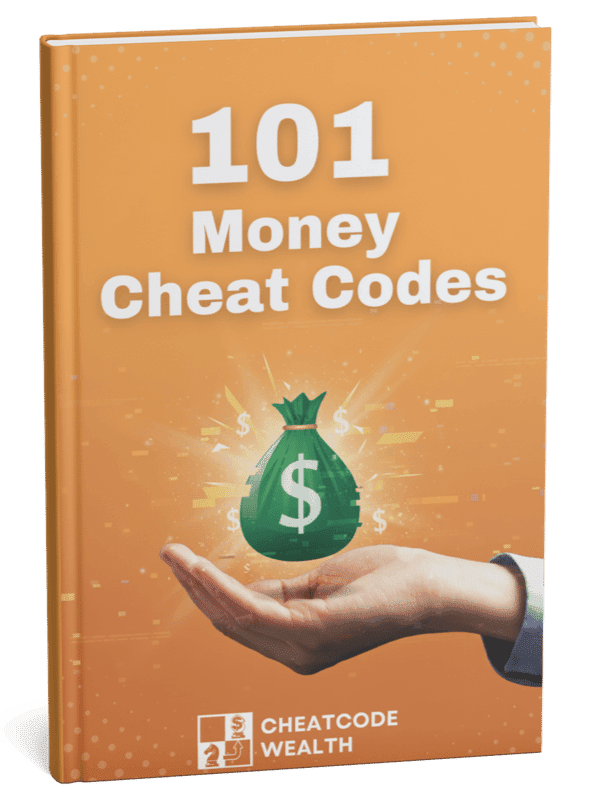

Subscribe to the newsletter and get a free copy of 101 Money Cheat Codes:
Spam-free. Unsubscribe anytime.
CheatCode Wealth™
Build your wealth. Keep your life.
© 2025. All rights reserved. Cheatcode Wealth LLC. This webpage may contain paid affiliate links.